Why a Mario Painting Nintendo Threw Away Sold for $329,400
Nintendo once treated this hand-painted Donkey Kong advertisement as office clutter. Decades later it sold for more than twice its top estimate, because it shows Mario before he was even called Mario.
The short version
This is Leslie Cabarga's 1981 painting for the North American Donkey Kong arcade flyer, which the auction house calls Mario's first public appearance. A Nintendo of America employee rescued it from a dumpster during an office expansion in the late 1980s and forgot it in a coffee table for nearly four decades. In October 2026, Landry Pop Auctions sold it for $329,400, which the house presents as a record for video game art at auction.
Lot 102: an advertising painting with a $329,400 result
On October 28, 2026, Landry Pop Auctions closed an online sale called "Jumpman: The Beginning of an Icon," devoted to original art and artifacts from Nintendo history. Lot 102 was a painting the illustrator Leslie Cabarga made in 1981 for the North American promotional flyer of Nintendo's arcade game Donkey Kong. The house estimated it at $100,000 to $150,000. It finished at $329,400, more than twice the top of that range.
The object is modest. It measures 19⅞ by 16⅜ inches (50 × 42 cm) and is built in two layers: the figures are painted in acrylic on a sheet of acetate, which lies over a background of ink and airbrush on cardstock board. The auction house described it as in great condition with vibrant colors and minor wear along the extreme edges. Japanese writing runs across the front, and an internal work order form is taped to the top right corner. Those marks show it was a working piece of commercial art, made to be printed and then forgotten, and never meant for a gallery wall.
The flop that made Donkey Kong necessary
The painting's value starts with a failure. According to the auction house, Nintendo had invested heavily in an arcade game called Radar Scope in 1980. Wikipedia's history of the game says 3,000 cabinets were shipped to the United States, only 1,000 sold, and about 2,000 sat unsold in Nintendo's warehouse.
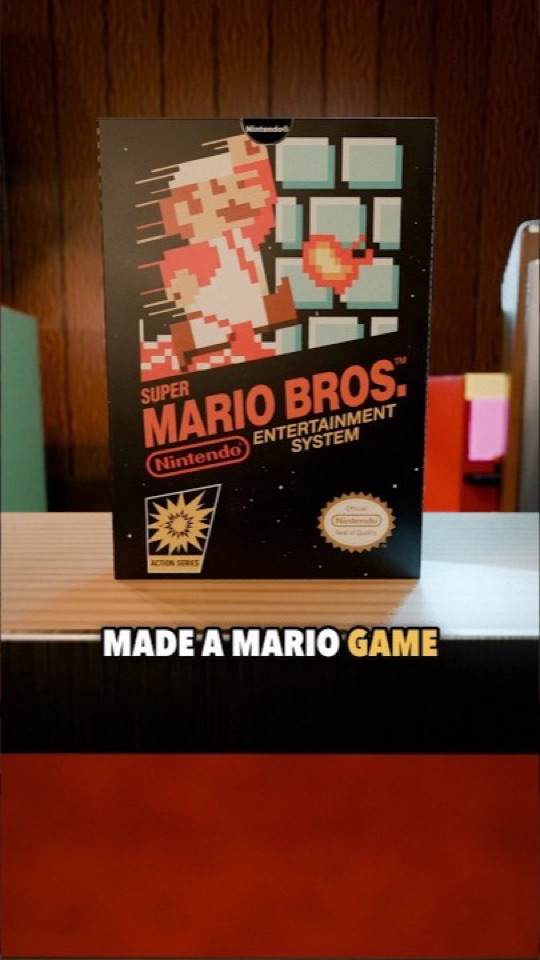
Looking for a way out, Shigeru Miyamoto designed a new game that ran on the existing hardware. Conversion kits made of ROM chips and new marquee graphics went to Nintendo of America. A small team that included Minoru Arakawa and his wife installed them on more than 2,000 Radar Scope machines. The new game was Donkey Kong, and its hero was a carpenter called Jumpman. The auction house says the game's huge commercial success made Nintendo a serious competitor in the American arcade business and helped secure the company's future. Shortly after release, Jumpman was renamed Mario. He got his own game, Mario Bros., in 1983, and then Super Mario Bros. in 1985.
How the art ended up in a dumpster, then a coffee table
Success also explains why the painting was thrown away. At the height of what the auction house calls "Nintendo Fever" in the late 1980s, Nintendo of America was expanding its offices. The Brazilian outlet Critical Hits reported that the company cleared a storage room to make space. Original illustrations were among the materials being discarded. Once the flyer had been printed, the painting had done its job, which is likely why a fast-growing company saw it as old advertising material and not as history.
An advertising executive, Donna Darbous, noticed the artwork. With her supervisor's permission, she took several pieces out of the dumpster. Then she put the rescued works away in the flat drawers of a coffee table and forgot about them. Nearly four decades after she left Nintendo, while sorting through her belongings, she went looking for the art. She found it safely stored among prewar lithographs. In the meantime, Mario had grown from an arcade sprite into a global icon across video games, television, film and merchandise.
What pushed the price past the estimate
Several things worked together. The first is origin. The lot is presented as the first public illustration of the character, and collectors tend to pay most for the moment a famous figure begins. The second is survival. Production art from that era was routinely thrown out, and the auction house calls the pieces Darbous saved rare surviving examples. That suggests very few comparable paintings exist. The third is provenance: the work came straight from a former Nintendo employee, with a documented and unusual story of how it survived. The fourth is condition. After decades in a drawer, the colors were still described as vibrant.
Behind all of that is Mario himself. A character known everywhere makes his first painted appearance a cultural artifact as well as a piece of advertising. That demand is what turned a $100,000 to $150,000 estimate into $329,400. Watch the short video on this page for the story in under 30 seconds.
A record, by the auction house's count
Dexerto reported that the sale set a new benchmark for video game artwork at auction. The previous record was $63,000, paid in 2023 for the original cover art of Prince of Persia, so the Donkey Kong painting sold for more than five times that figure. The auction house said the result shows "how valuable the surviving artwork from his earliest days has become." The claim comes from the seller and the outlets that repeated it, not from an independent audit of every sale in the field.
The same auction shows the gap between original art and mass-produced items. A graded 1985 copy of Super Mario Bros. sold there for $34,160, according to Dexerto. Millions of game cartridges were made. There is only one original painting of Mario's first appearance on paper, and a company once threw it out.
Questions people ask
Who painted the original Donkey Kong flyer art?
The illustrator Leslie Cabarga painted it in 1981 for Nintendo's North American promotional flyer for the Donkey Kong arcade game. The figures are acrylic on acetate, laid over ink and airbrush on cardstock board.
How did the painting survive after Nintendo threw it away?
During an office expansion at Nintendo of America in the late 1980s, advertising executive Donna Darbous saw original illustrations among discarded materials. With her supervisor's permission, she rescued them from the dumpster. She kept them in a coffee table's flat drawers and rediscovered them nearly four decades later.
Does the $329,400 price include the buyer's premium?
$329,400 is the result Landry Pop Auctions published for lot 102. The lot page does not say whether it includes the buyer's premium.
Sources
- Lot 102: Leslie Cabarga, Donkey Kong North American Arcade Flyer Original Art (Nintendo, 1981); essay 'Nintendo Fever: Donna Darbous & The Ascent of Mario'Landry Pop Auctions · 2026-10-28
- Rare Donkey Kong poster sold for record-breaking $300,000 after almost going in the trashDexerto · 2026-10-28
- Original Donkey Kong art to be auctioned for up to $150,000Critical Hits · 2026-10-15
- Auction of original items launched by a former Nintendo executiveInstant Gaming News · 2026-10-01
- Radar ScopeWikipedia · 2026-11-02
Spotted an error? Tell us. See our editorial standards.
A new price story most days. Subscribe on YouTube so you don't miss the next one.
Subscribe